

Better together.
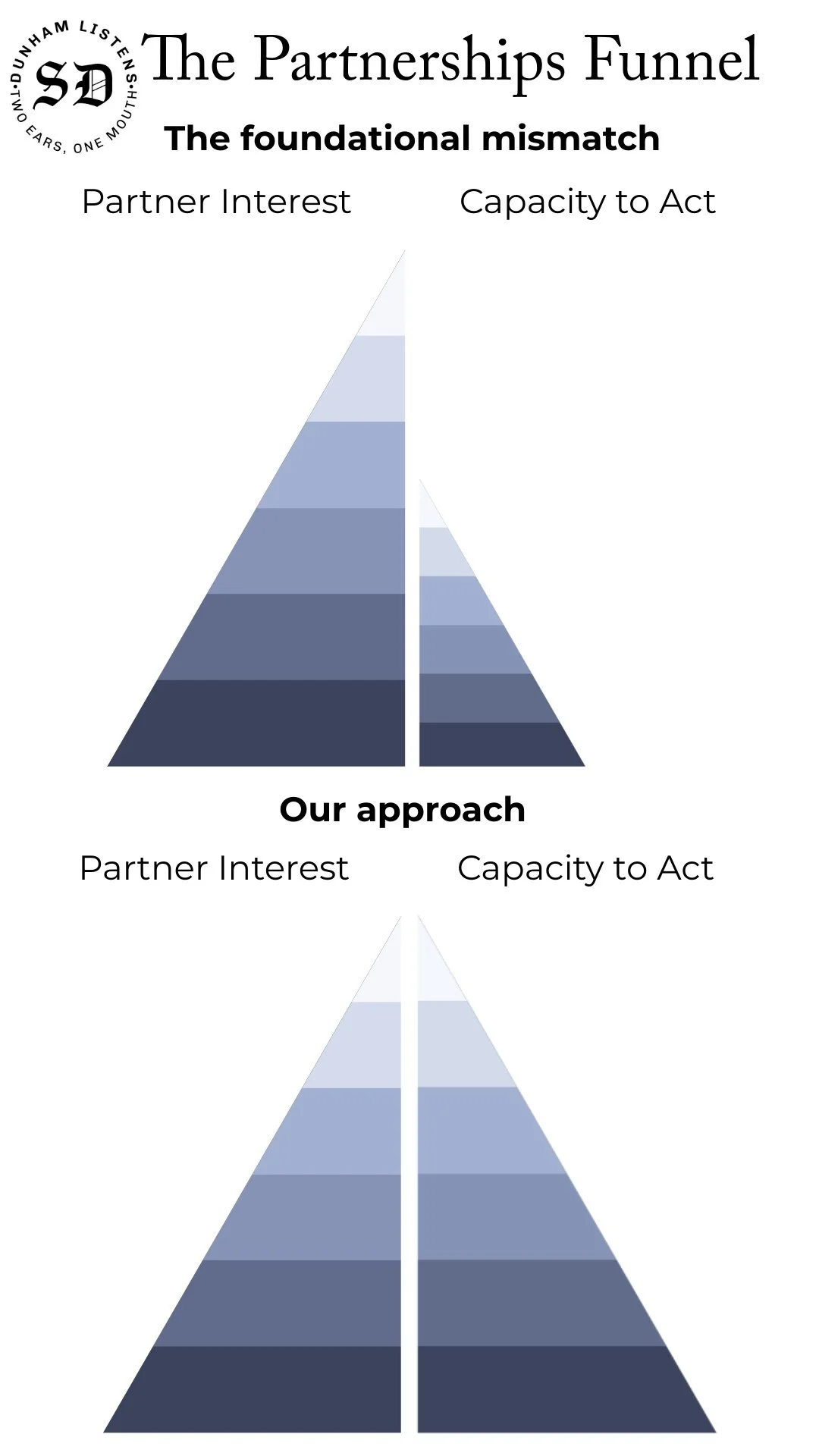
Partner Gravity Isn't the Problem
Nearly every organization we work with has more partner interest than it can capitalize on.
ISVs fall short on functionality and implementation even with a signed agreement in hand.
Political candidates fail to build coalitions wide enough to actually win.
Small business owners miss the businesses two doors down that could unlock their next customer base entirely.
The demand for partnership is rarely the gap. The infrastructure to act on it is.

"Partner or Die"
The need to partner is a competitive reality across industries and organization types.
Organizations that can't build functioning partnerships get outscaled by ones that can.
No single team, person, or company grows as fast alone as it does with the right partners pulling in the same direction.
The ones that figure this out build a growth engine their competitors can't easily replicate.

It’s Always Money
Partnerships break down when priorities, incentives, and risk tolerance don't line up, not because people don't like each other.
Organizations often sense they’re leaving something on the table.
They maintain systems that don’t serve them and they pay the price at scale - in forfeited innovations, lost deals, and frustrated partners.
We advocate for clarity, first - paying people for what you want them to do.
The rest of the framework is what takes companies from having partners to having a system.
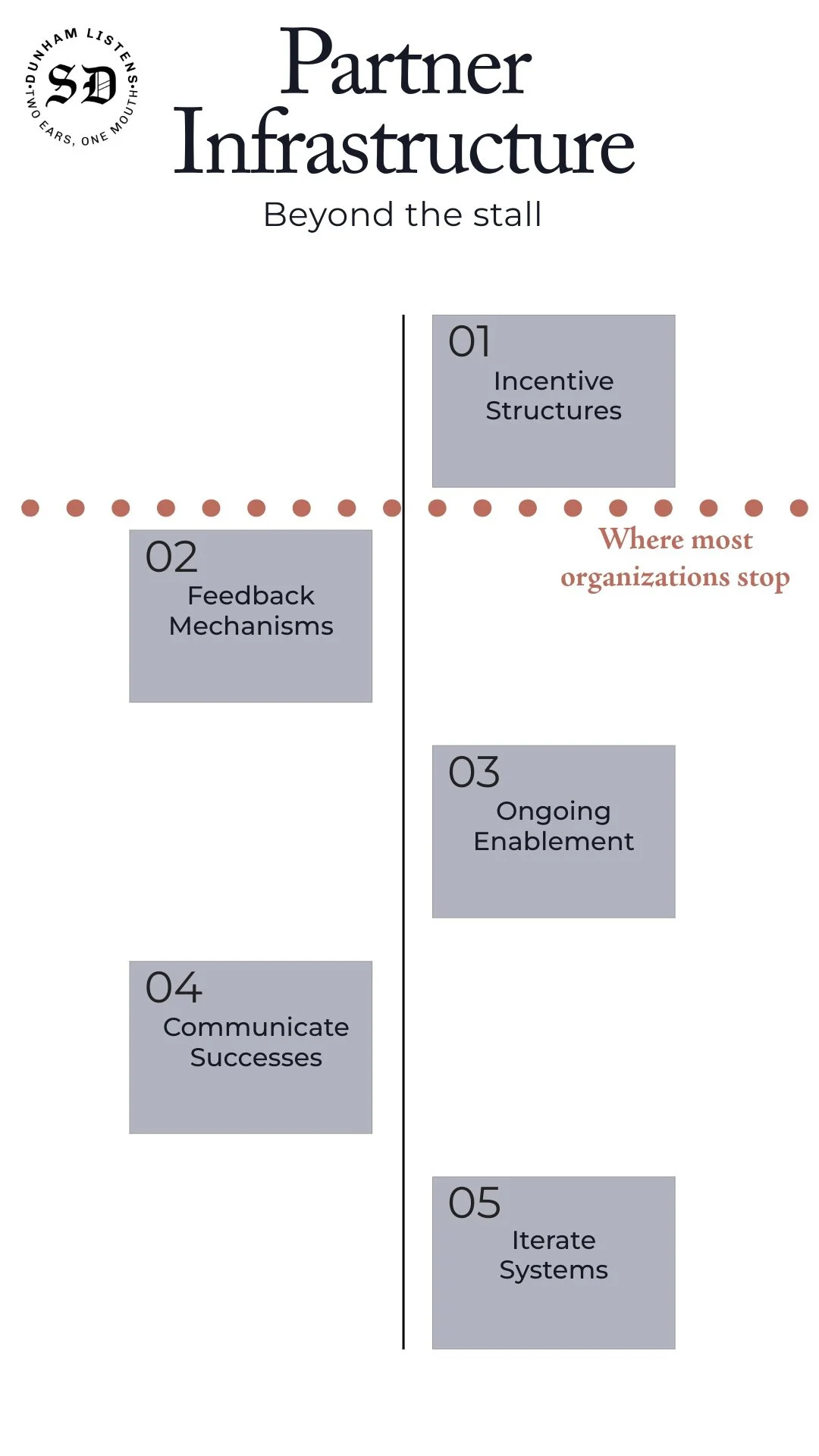
Stuck in the Stall
There's a specific point where most partner programs stall: the jump from seeing partnerships as a cost center to a revenue engine.
Step Two is giving partners a real say in your roadmap instead of simply handing them a megaphone to scream into the void.
Organizations that don't make that jump top out.
The ones that do will get partners who defend and grow the ecosystem themselves because their success is now structurally tied to it.
Who this is for?
Organizations with real partner interest from inbound requests, existing relationships, maybe even a marketplace already live - and no system built to turn that interest into revenue, coalition strength, or market share.
If your team has more than it can handle, that’s what this is built for.
FAQs
Do you work with early-stage partner programs or only mature ones?
1
Both - I’ve worked with new organizations who roll out V1 and legacy vendors who have to iterate. The earlier the incentive architecture gets built correctly, the less expensive it is to fix later.
Is this specific to tech/SaaS?
2
No, the same incentive-design logic applies to political coalitions, local business networks, and nonprofit partnerships. The mechanics are consistent across sectors.
What does an engagement typically produce?
3
A concrete incentive and governance structure. We’re not big on slides, so we won’t hand you a strategy deck that’ll sit buried in your documents folder and collect dust. Our engagement is built on action and doing what you say you’ll do.