
"This is probably a dumb question," I started, my first words as the newest member of the team managing a partnership, "but if we want to know what customers might think about this idea, what's stopping us from running it by them to get their thoughts?"
You might be someone who says "There's no such thing as a dumb question." Often times, even when someone might hold that to be true personally, there are still questions that don't get asked or assumptions that don't get challenged because "everyone already knows that," and it can still feel dumb to question why something exists, not just whether it exists.
Here are 5 types of dumb questions to ask:
New Features - It's considered a given that when a new feature is being developed, it can be tied back to solving a specific customer pain. Not always true.
It might feel like it goes against the grain, but asking "What evidence shows this feature solves a customer pain? Who experiences it?" can save a lot of time, money, and opportunity cost chasing what customers won’t pay for.
Audience Segmentation - Successful organizations know they cannot possibly serve all people with their product or direction. They craft experiences for target audiences who are most likely to benefit from their offering. Segments are worth revisiting and honing as more data is available. It's not always top of radar because teams assume it's set in stone, not malleable.
Ask "Who is our target audience and who are our best/worst customers?" can help nail down exactly who you should target.
Customer Feedback - It's not a secret that most customer feedback goes into a black hole. Even for organizations who have a ticketing system like ZenDesk or ServiceNow, that doesn't necessarily mean there's a good way for customer feedback to make it into outcomes.
It's worth asking "How do we capture feedback from customers and stay accountable to promised changes?"
Incentive Structures - everyone from top to bottom in an org has incentives to perform certain behaviors. Getting curious and diving deep into who is paid for what can expose where incentives don't align with the metrics the organization cares most about driving.
Worth asking questions like "What activities are considered most important, and who is accountable for doing them?" often highlights clear changes to make for the results you want.
Organizational Hierarchies - Power and influence are similar, but influence is less likely to be identified on an org chart. Influencers can help or harm your deal and you're better served by uncovering influence than leaving it to chance.
Instead of focusing on who has ultimate decisionmaking authority, look at the full scope of stakeholders, keep it simple and ask each one "What do you think about this thing we're working on?" It's almost universal that a wide-net approach uncovers a potential landmine you would've stepped on.
Dunham Listens helps organizations build their capacity to ask good questions and the systems to translate answers into action. We make it easy to find their voice and use it to speak with the audiences they intend to serve, turning trust and accountability into results.
Reach out if you're the type of organization that wants results, even if that means asking different types of questions.
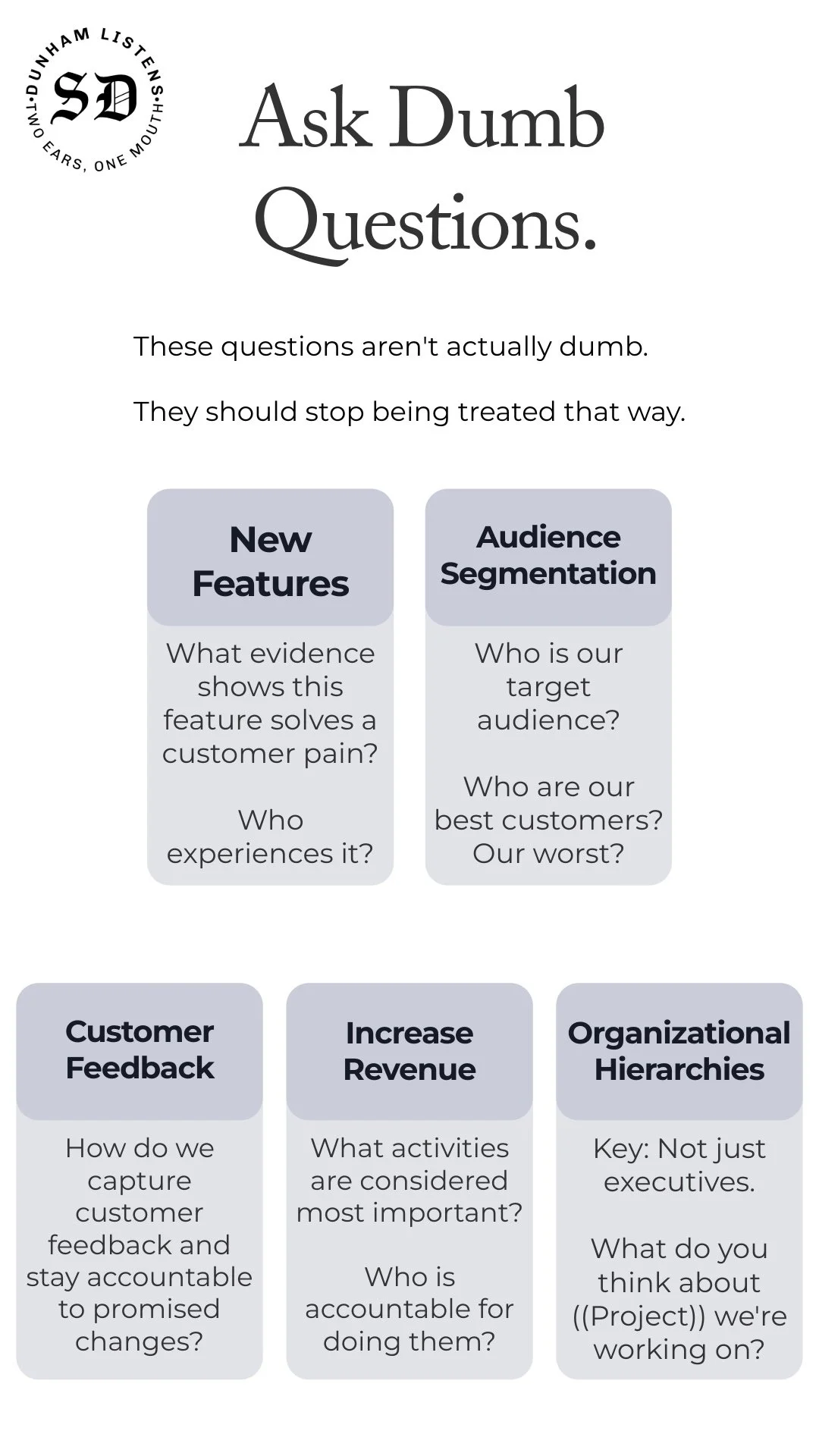
Our intro guide on how to ask more “dumb questions.”